
Last Updated on 2026-07-10 by a-indie
Musical Resonance, and the Artists Who Shaped Them
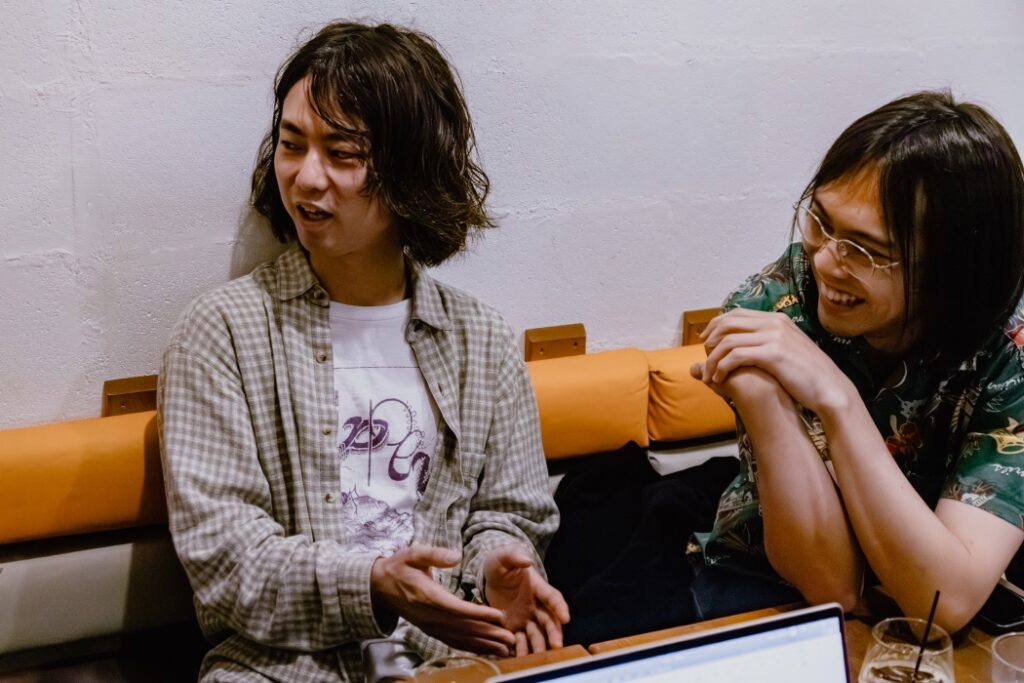
Maririn: You will be playing together tonight. After listening to each other’s music, did you feel any commonalities or resonance?
Maisie: I think it is really close. It is less that the music itself sounds alike, and more that I think our fans and DYGL’s fans would probably like each other. There is definitely a connection there, under that broader umbrella of indie rock.
Akiyama: When I listened to The Belair Lip Bombs, I felt something close to an Asian rock vibe from it, somehow. I am not totally sure if it is the melodies or the guitar work, but there is some kind of commonality there. What are your musical influences like?
Maisie: That is such a hard question. We listen to a really broad range of stuff, there is no one single band or sound we point to. Classic rock from the UK is definitely in there. What about you guys?
Akiyama: I actually got into music through that Libertines and Strokes era, that post punk revival sound, and from there branched out toward more classic rock and more contemporary stuff too. Recently I have really been into a band called Water From Your Eyes.
Maisie: I love Water From Your Eyes, they are so good. I think they were actually just in Australia, back in March.
Akiyama: Nice.
Maisie: Yeah. I am also into This Is Lorelei, that is the solo project from Nate Amos, one of the guys in Water From Your Eyes.
Catchiness and Beat, What Each Band Holds Dear
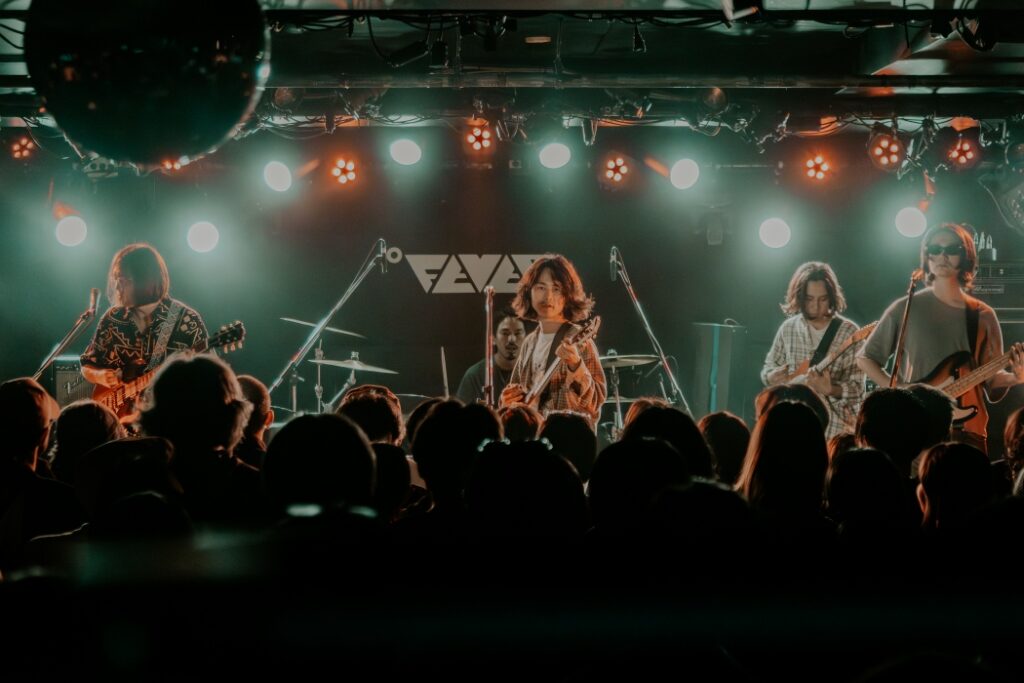
Maisie: That makes me really happy to hear. That is a feeling I really want to hold onto, wanting people to feel uplifted the second they hear it. That catchiness, you know?
Akiyama: We have actually been changing in the opposite direction lately. We used to put melody front and center, but these days we are focused more on rhythm and the beat. For the next album we want to express a balance of both, so hearing music like The Belair Lip Bombs, which has both of those appeals, is really inspiring. I am really looking forward to seeing you all play tonight.
Maisie: I really love DYGL’s beat. Music you can dance to, music that makes your body move, that is really important I think.
Akiyama: Maybe that is a bit of an Australian band thing, having that beat that makes people want to dance. Maybe it comes from the environment, or the climate.
Maisie: Do you know the band Rolling Blackouts Coastal Fever?
Akiyama: Yeah. I think I caught them live once at SXSW. Great band. I actually did not know they were an Australian band.
Different Cities, Different Musical Colors
Maririn: I have heard that the music coloring changes from city to city in Australia. Is that actually true?
Maisie: A little, I think it blends together a lot these days, but yeah, there are some differences. Perth, for example, has a lot of psychedelic, surfy bands. Melbourne is known more for indie rock, that nineties kind of sound, a lot of influence from the New Zealand label Flying Nun Records, the label behind acts like Aldous Harding, Fazerdaze, and The Beths. But overall I think it has become a much bigger melting pot now.
Shimonaka: In Japan, I would say Kyoto has a lot of artists doing ambient or experimental music, literary kinds of folk. There is a philosophical feel to it that comes from being such a historic city. Okinawa has its own distinct hip hop scene, it is not as heavy as somewhere like Kawasaki, it has got a more relaxed vibe. It is interesting how each city has its own character.
Maisie: Is J-pop still the big thing across all of Japan?
Shimonaka: Definitely. I think you can kind of tell the difference between Tokyo J-pop, Osaka J-pop, and Okinawa J-pop just by listening. There used to be artists like Masaki Ueda who would deliberately sing in their local dialect, but you do not really hear that so much anymore. Honestly I do not watch much TV these days, so it is a rough impression. But in the indie underground scene, the regional differences are not as obvious to everyone the way they are in J-pop.
Maisie: That is kind of sad.
Continue to next page ⏩️

 - is a music media platform run by BELONG, a Japanese music organization. We publish music articles with a focus on indie music.